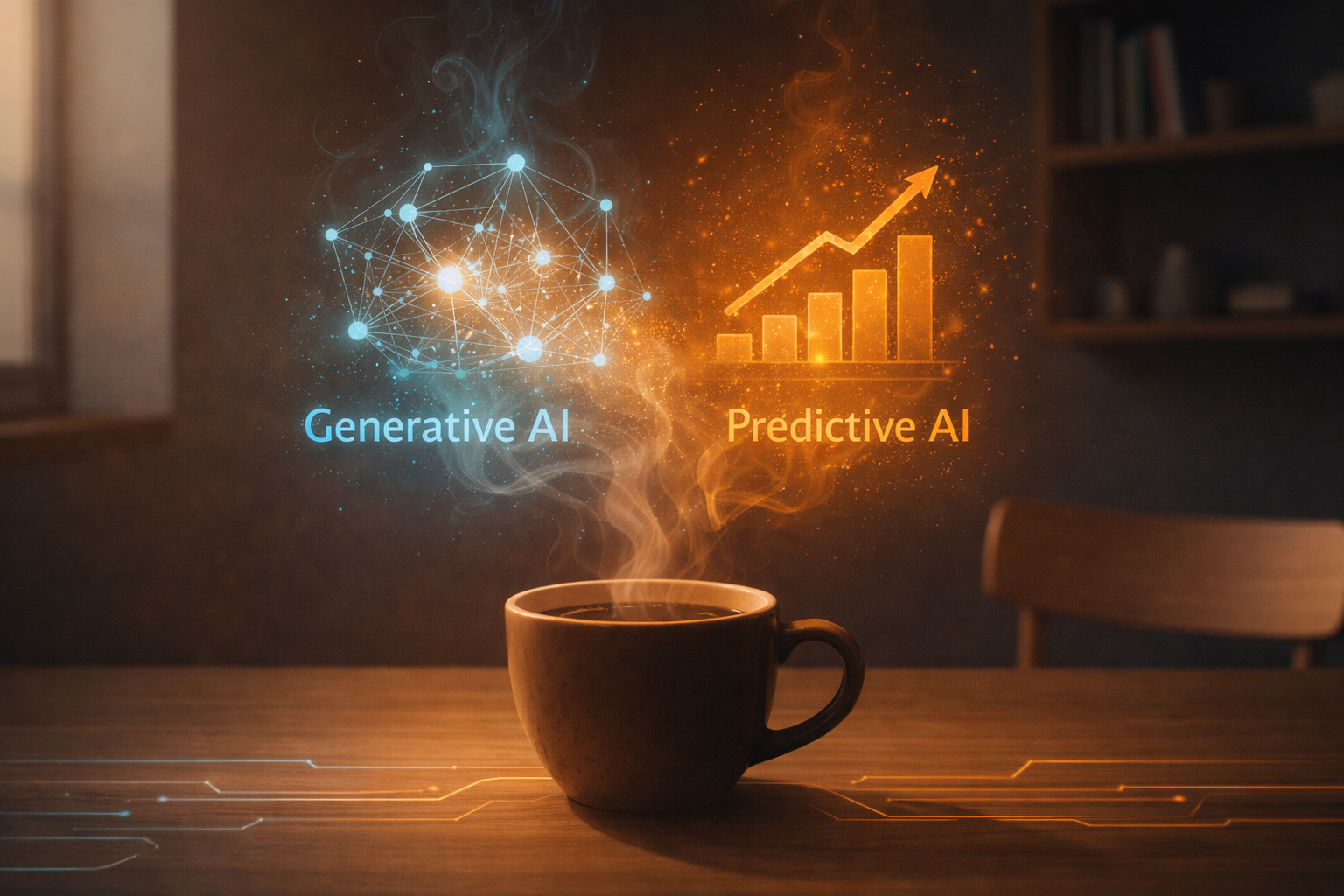
Generative AI vs Predictive AI: Which One Does Your Business Actually Need?
Last month, a friend texted me: "Our company just spent $50K on an AI solution that doesn't do what we thought it would." They'd bought a generative AI tool when they actually needed predictive AI.
This happens more often than you'd think. The AI buzzwords fly around, everyone nods knowingly, and six months later you realize you bought the wrong tool for the job.
Let's fix that right now.
The Simple Difference Nobody Explains Clearly
Generative AI creates new things. It writes emails, designs images, generates code, produces content that didn't exist before.
Predictive AI analyzes patterns and forecasts what's likely to happen next. It tells you which customers might leave, what sales to expect next quarter, or which machine needs maintenance soon.
Think of it this way: Generative AI is your creative assistant. Predictive AI is your fortune teller.
The Coffee Shop Analogy
Imagine you own a coffee shop. Generative AI is like a barista who invents new drink recipes, designs your menu boards, and writes clever social media posts. It creates things that never existed.
Predictive AI is like analyzing years of sales data to forecast that you'll need 30% more staff next Tuesday at 3pm, or that Customer Sarah is probably going to cancel her subscription unless you send her a special offer.
One creates. One predicts. Both are valuable, but for completely different reasons.
When Generative AI Is Your Answer
You need generative AI when your challenge involves creating content at scale.
If you're spending hours writing product descriptions, email responses, social media posts, or marketing copy, generative AI can help. If you need to generate images, create variations of designs, or produce first drafts of anything, this is your tool.
A marketing team using generative AI might produce 50 email variations for A/B testing in minutes instead of days. A customer service team might draft personalized responses that agents then refine and send.
The key question: Do you need to make something new faster than humans can alone?
When Predictive AI Is What You Actually Want
You need predictive AI when you're trying to make better decisions based on patterns in your existing data.
If you want to reduce customer churn, optimize inventory, forecast demand, identify fraud, or predict equipment failures, predictive AI is your friend. It looks at what happened before and tells you what's likely to happen next.
A retail company using predictive AI might forecast that winter coat sales will spike two weeks earlier than usual based on weather patterns and search trends. An airline might predict which flights will have no-shows and adjust overbooking accordingly.
The key question: Do you have data about the past that could help you make smarter decisions about the future?
The Mistake That Costs Thousands
Here's where companies go wrong: They hear "AI" and assume one solution fits all problems.
Someone says "We need AI to improve customer retention." The team buys a generative AI tool that writes better emails. But the real problem was identifying which customers are at risk in the first place. That's a predictive AI job.
Or a company needs content creation help, so they invest in predictive analytics. Six months later, they're drowning in data insights but still manually writing every blog post.
Match the tool to the actual problem, not the buzzword.
The Honest Truth About Combining Both
Here's where it gets interesting: The most powerful solutions often use both.
Predictive AI identifies that Customer John is likely to cancel his subscription. Generative AI then creates a personalized retention email specifically for John's situation. Predictive AI forecasts demand for your product. Generative AI writes targeted ad copy for the audiences most likely to buy.
But start with one. Solve one problem well before you try to solve everything.
What You Should Do Right Now
Grab a coffee and write down your actual business challenge. Not "we need AI." The real problem.
Are you creating content too slowly? That's generative AI territory. Are you making decisions with incomplete information about what's coming? That's predictive AI.
Ask yourself: Do I need to make something new, or do I need to know what's likely to happen next?
That one question will save you months of frustration and thousands in wrong investments.
The Bottom Line
Generative AI creates. Predictive AI forecasts. Your business probably needs one more urgently than the other right now.
The companies winning with AI aren't using the fanciest tools. They're using the right tools for their actual problems. They started small, proved value, then expanded.
See you next Monday morning. Bring your coffee and your clarity.